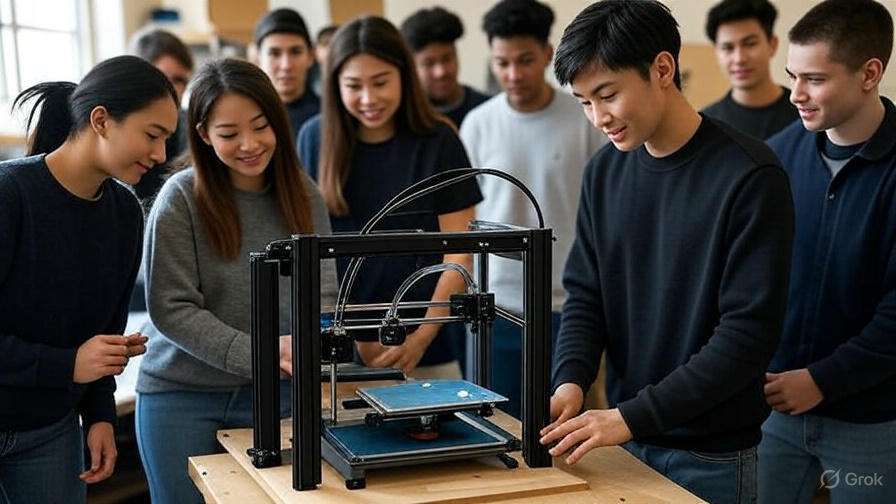
Emerging technologies such as artificial intelligence (AI), quantum computing, biotechnology, rocketry and drones are projected to be in high demand over the next decade, driving innovation across industries like healthcare, energy, and cybersecurity. AI, for instance, is expected to transform fields through applications like autonomous systems and predictive analytics, while quantum computing promises exponential advancements in data processing for solving complex problems like climate modeling. Biotechnology, including CRISPR gene editing, will revolutionize medicine, and robotics will enhance automation in manufacturing and logistics. Engaging K-12 students in STEM programs that introduce these technologies fosters early familiarity and critical thinking skills essential for navigating their rapid evolution. Hands-on experiences with coding, drone / rocketry kits, or virtual reality simulations build technical proficiency and resilience, preparing youth to adapt to future workforce demands. For example, programs like Tx STEM Ed’s mentor matching connect students with experts, offering real-world insights into these fields. Early exposure ensures students are not only comfortable with emerging tools but also inspired to pursue STEM careers, aligning with the projected 10.4% growth in STEM occupations from 2023 to 2033, significantly outpacing the 4.0% growth for all occupations.
Starting STEM participation in K-12 provides a critical head start, allowing students to develop foundational skills and confidence over years, rather than scrambling to catch up later. Project-based learning encourages problem-solving and collaboration, mirroring real-world applications. For instance, coding bootcamps, after school activities, and summer camps let students experiment demystifying complex concepts early. This extended timeline helps students from diverse backgrounds, including underrepresented groups, overcome barriers like access to advanced courses, which affects 10–25% of high schools, particularly those serving Black and Latino students. By high school, students with early STEM exposure are better equipped to tackle specialized programs, such as those partnered with tech companies, which enhance curriculum depth. In the U.S., only 16% of high school seniors express interest in STEM careers, underscoring the need for early engagement to boost participation. Moreover, the STEM workforce grew 20% from 2011 to 2021, reaching 34.9 million workers, yet a skills gap threatens to leave 2 million STEM jobs unfilled by 2025, highlighting the urgency of preparing youth now for these high-demand fields.
Robotics Team Grants
We are currently offering grants to robotics teams in the Rio Grande Valley (956). These grants are for both community and school based teams
High School Rocketry Grants
We are currently offering grants to robotics teams in the Rio Grande Valley (956). These grants are for both community and school based teams
Grants for K-12 STEM Programs
Tx STEM Ed is excited to offer limited grants for students to participate in approved STEM programs we support. We encourage the submission of a grant application as early as possible in the school year to give us time to match you with available funding.
Building a strong future for Texas starts with empowering the innovators of today. Your contribution directly funds the high-impact workshops, mentoring, and technical training necessary to equip our students and educators for a competitive global workforce. Join us in fueling the next generation of Texas talent—every dollar helps turn STEM potential into professional reality.